How to Get Preschoolers to Listen to You & Respect You
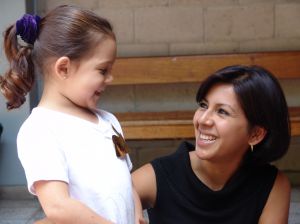 As a teacher or early childhood educator today, many wonder how to get preschoolers to listen in the classroom or outside the class room and respect what they are told from their parents or teachers, and act accordingly.
Getting pre k kids, or young children in general to listen is no easy task for many teachers, and is the cause of much frustration for many.
The preschool educational article written below is an original article written by Marisa Robinson, a professional early childhood educator (R.E.C.E) which gives insight into how to get preschoolers to listen by being consistent and firm in your actions.
She provides some very valuable information and real life experiences for parents and teachers looking to take charge of the preschool or kindergarten children in their care and getting preschoolers/children to listen using some great ideas for fast, effective results that work.
Read the entire educational article by Marisa Robinson (R.E.C.E) below and please Bookmark & Share.
Getting Your Preschooler to Listen to You
Information for Parents, Caregivers, and ECE Teachers Dealing with Behavior Issues In Children
As an Early Childhood Educator I have had many parents approach me and ask this question: “How do you get my child to listen to you, they won’t do that for me, or, they don’t listen to me like that.”
The answer is simple. If you want to know the answer please read this article and share accordingly.
No means no. Now before you roll your eyes and say, “I’ve heard that before, I’ve tried it and it doesn’t work.” You need to read what I have tried and guarantee will work.
I was a supply teacher for a while and would cover vacations and maternity leaves and sick days at a daycare. So I got tested really badly from the preschool children in my care. Why wouldn’t I, I was a new teacher that wasn’t there everyday so the children wanted to test me to see what they would get away with.
One day in particular I had set out the teeter-totter for the children on the playground (among other toys to play with). One of the daycare rules that the children know very well is that when they are on the teeter-totter with a friend, they are not supposed to jump off the teeter-totter while they have their friend on the other end, up in the air. They know that their friend will end up slamming down to the ground and could be injured.
I observed this one young boy do it to one of his friends. So I reminded him that we weren’t supposed to do that. About 15 minutes later I saw him do it again.
As a Parent or ECE Teacher – What would you do?
A. Give him 2 more chances?
B. Remove him from the teeter-totter and let him play somewhere else?
C. Keep reminding him of the rules hoping he will stop?
D. Ignore the situation; he’s just doing it for the attention. He will stop if I look the other way.
E. None of the above.
The answer is E.
All the choices I gave are what I see being done so often with some parents and also some day care providers I have worked with.
If I had done A-D, I was keeping the child in the air at high risk for getting a tooth knocked out, or falling hard to ground and possibly biting his tongue or lip severely.
And as for letter B, I would be putting the other children at risk as the child who jumped off the teeter-totter seemed to be in the mood to try and hurt someone.
Not too mention he was deliberately disobeying a school rule that was known well and had been repeated to all children.
What did I do? I immediately removed the child from the area by holding his hand and walking him to a chair set in a quiet area away from the other children.
He was yelling and screaming that he didn’t want to go on time out. So I got down to eye level with him and calmly said, “You chose to go on time out.”
He then yelled, “No I didn’t.” So I calmly said,” Yes”, when you dropped your friend from the teeter-totter you were telling me that you wanted to go on time out because you know that we get time outs for breaking school rules, especially when they can hurt our other friends.
He didn’t like what I said very much so he got up from time out and started to walk away. So I directed him back to the chair. He got up again and walked away, so I again directed him back to the chair. He did this about 4-5 times. What did I do to show him I was in charge? I didn’t give up.
In many situations, by the third or fourth time I’ve seen parents give up because they think it’s hopeless. That’s exactly what the child wants you to think. They are testing you to see what they can get away with.
So if you give up, they know exactly what to do next time, what buttons to push, and how long it will take before you give up and give in to what they want.
Back to the situation.
I calmly said to him, “I can do this all day if you want, but then you will miss out on play time outside with your friends.” He didn’t like that very much so he just sat in the chair and yelled at me some more. He said he hated me and that he hated school.
How do you feel when your child tells you they hate you when you discipline them by time-out or loss of privileges?
Many parents take it to heart and think that their child really won’t love them anymore or have a grudge against them forever, or are harming them by making them so angry, and they cringe when they hear their child say such harsh words to them.
The big thing to remember and the hardest thing to do is, take it with a grain of salt.
You are the adult, you make the rules to be followed, not broken. If they start to break the rules and get away with it, you are basically telling them not to listen to you, and that they are the ones making the rules. Your rules don’t really matter if you don’t care about them.
When the child said he hated me and school I immediately said, “But I love you, and the school wouldn’t be the same if you weren’t here.”
I then asked him why he dropped his friend off the teeter-totter when he knew what the rules were. He just sat there and ignored me. So I asked him again. He again didn’t answer.
So I said, “I guess you’re not ready to talk to me, you can stay on time out until you’re ready to answer my question.”
He just sat there and got angry all over again.
Notice he just sat there?
He did not try to get up again because of how I handled the situation mentioned earlier. He knew he was not in charge of being able to get up when he wanted.
When he had calmed down I went over and asked him again why he dropped his friend off the teeter-totter when he knew what the rules were. He again ignored me. I didn’t bother asking a second time.
This time I didn’t say anything further, I just walked away. He got all upset again so I left him to settle down.
He finally said to me, I’m ready to talk now. But this time I said to him, “I’m not ready now. I came up to talk to you twice and you ignored me. I will come back when I feel ready again.” He didn’t make much of a fuss this time. He just kind of crossed his arms and huffed and puffed.
When I saw he was all calm again I went over and said, “Are you ready to get this over with?” He said, “Yes.” As I was talking to him he was looking on the ground and looking behind me and looking at the wall.
So I said, “Please look at me when I am talking to you so I know you are paying attention.” He refused to do so. So I said, “I guess I will leave again and come back when you are ready to look at me when I talk.”
He said, “No, I’m ready, I’m ready.”
So I asked him, “Why did you jump off of the teeter-totter and let your friend fall to the ground?” He said, “Because it’s fun.” I replied, “It may seem fun but would it be fun if it happened to you?” He said,”No.” I explained again what the dangers of getting hurt by doing this were.
He looked at me while I spoke to him and when I was done I asked him to repeat what the dangers were.
He repeated them to me. I said to him, “We have these rules because we love all of you and don’t want any of you to get hurt.” I then said he could go play with his friends.
Needless to say, when I returned to cover positions in that classroom, I NEVER had to talk to him again about dropping his friends off the teeter-totter.
So, what about the fact that the child said he hated me? Well, for about the next 20 minutes or so he kept his distance from me. Then about an hour later he told me he loved me. I gave him a big hug and told him I loved him to. Whenever I covered a position in that room after that situation, he was one of the first ones to run up to me and give me a hug.
He has told me he loves me on different occasions during classroom routines, just out of the blue.
I don’t want you to think he was the only one I dealt with in such a firm way. That’s how I deal with all the children that act out in anger by biting, throwing things, hurting their friends on purpose and also purposely breaking rules.
I will be writing other articles on other experiences and posting them for all to read. I have stood my ground though; I don’t treat any child differently.
No one gets special privileges; no one gets away with something another child might not. On many occasions I have been complimented on how in control I am able to keep a classroom, how the children listen to what I say, and how much fun we have as a class.
It works, it really does. If I didn’t believe it or experience it first hand, I wouldn’t write it.
What are some effective key points of this situation that made it work?
1. I got down to the child’s eye level.
2. I stayed calm during the entire situation.
3. I didn’t give in to anything. I made the situation go the way I wanted it to go.
4. I didn’t give up. I stood my ground until my point was understood and made.
5. No matter how I was feeling inside I had patience and didn’t let the child make me loose control of my emotions or the situation.
Now there are probably things going on in your mind like:
1. Why did you make such a big deal over the teeter-totter?
2. I don’t have the time to do all that.
3. I don’t think I could have the patience for it.
Let’s go through them one at a time.
#1. If you stop and think about it, the big deal really wasn’t over the teeter-totter. It became a situation where he wanted to take control and get his way. It took me only a few minutes at the end of this whole ordeal to resolve the teeter-totter incident. Everything in between was a power struggle where he wanted to be in control and see what he could get away with doing.
#2. It will not be such a big deal for every situation. Ever since that one incident with that child, he knows I don’t give chances. I give one reminder and then he will have to deal with the consequences of his actions. Anytime he does something deliberately that he is not supposed to, he respects my role as teacher and knows I won’t let him off with just an easy, “Please don’t do that again,” and then let him on his way.
I am able to deal with him within minutes and have the issue resolved. Most of the time, I don’t even have to get to the actual time out. If I see him starting to get sneaky like he’s going to do something, all I have to say is, “I wouldn’t do that unless you want a time out.” 9 times out of 10 he stops and I direct him to another activity.
#3. No patience? After a long day of working and dealing with miserable people and bosses and road rage and everything else we deal with everyday, who has any patience at the end of the day. The thing to keep in mind is, when dealing with your family, your precious children, don’t you want them to have a loving respect for you? It is hard, trust me.
Do you think it was easy for me to do what I did above? I was fuming inside, I mean fuming. I felt like running around the block about 10 times just to let my steam out. But are we as adults going to let preschoolers or young children get us to the point where we can’t control our own emotions?
How to Get Preschoolers to Listen (Summary)
We need to be role models. We need to teach them respect, listening to others, that there are rules in life that will have to be followed and it starts in the home. If our preschoolers & young children have no respect in the home, they definitely won’t have it outside of the home.
Try your best. It’s not easy. The faster you practice these things, the sooner you get the hard part out of the way, and you will find more peace in your household and receive more love from your children.
It may not happen the first time, but it will. Don’t give in. If you really want this to work stand firm and don’t give in. If I can do it, you can to.
© 2015 Marisa Robinson (R.E.C.E)
*If you have found this article helpful, please share, like and bookmark!
How to Get Preschoolers to Listen in the Classroom:
If you need effective, simple ways to get preschoolers to listen in class, be sure to check the link below for more useful information on dealing with kids and getting their attention.